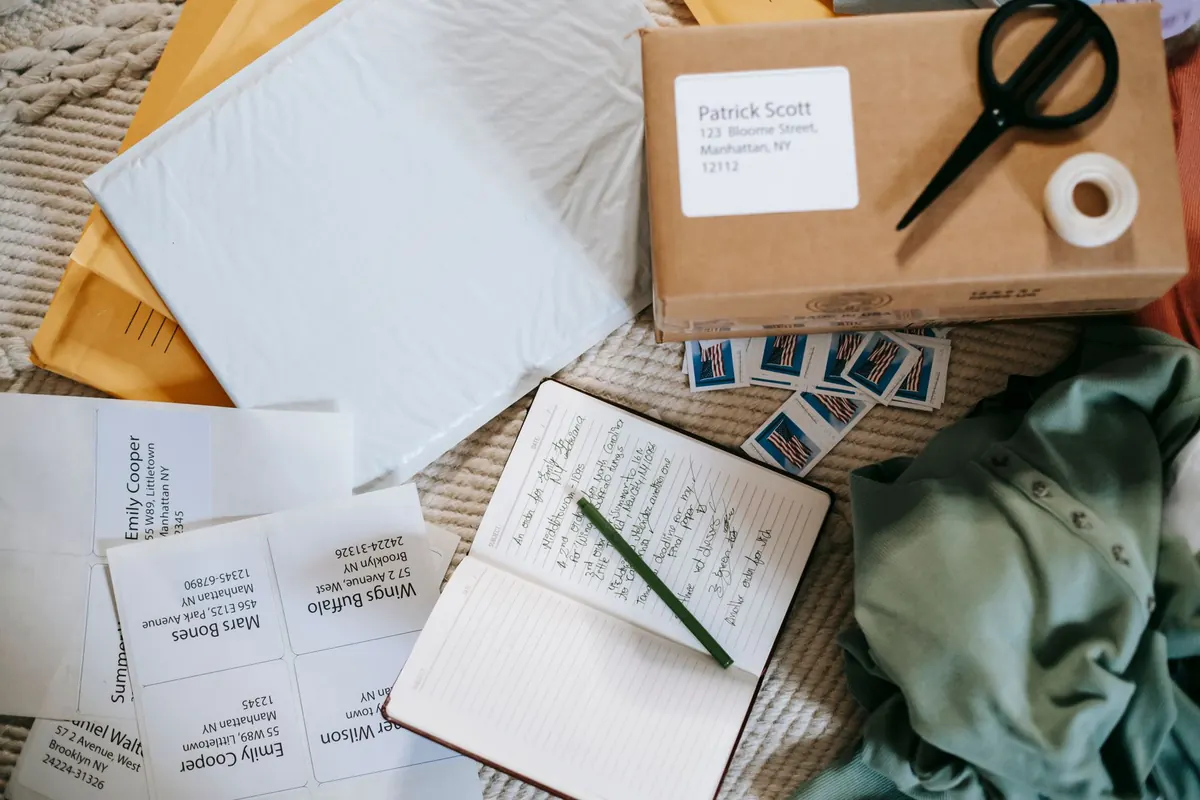
A bill goes out with a small flag stamp. A birthday card goes out with a larger one showing a vintage carousel horse. Both cover the same postage, and both arrive. But the two envelopes say different things, and one of them was almost certainly easier to prepare.
The difference comes down to which family the stamp belongs to: definitive or commemorative. Knowing the two apart — and knowing when each one earns its place on the corner of an envelope — makes routine mail faster and personal mail better.
Postal services issue stamps in two broad groups. Definitives are the everyday workhorses: printed in enormous quantities, reissued and reprinted over years, and sold in sheets, booklets, and coils. They usually feature a national symbol — a flag, a monarch, a landmark, a bird — and they come in enough denominations to cover almost any rate.
Commemoratives mark something specific: an anniversary, a person, a place, a scientific achievement, a cultural moment. They're printed once in a limited run, sold for a set period, and typically issued in only one or two denominations.
The names are a little misleading. "Definitive" sounds grand and "commemorative" sounds ceremonial, but the real difference is volume and lifespan. A definitive may stay on sale for a decade. A commemorative may be gone from the counter in a few months.
Definitives are built for volume. They come in low values and high values, which means you can hit an exact rate with one stamp instead of three. They're often available in coils — those long strips of self-adhesive stamps — which is why they're what you see on business mail, bills, and anything sent from an office.
Their small size matters more than people expect. A standard definitive leaves plenty of room for a return address, a mailing label, and a postal barcode, which keeps machine sorting smooth. If you're sending a stack of invoices or paying a utility bill by mail, use a definitive and don't think about it again.
One more point in their favor: because they're reprinted constantly, you can usually buy them in any quantity at any time, in any denomination you need.
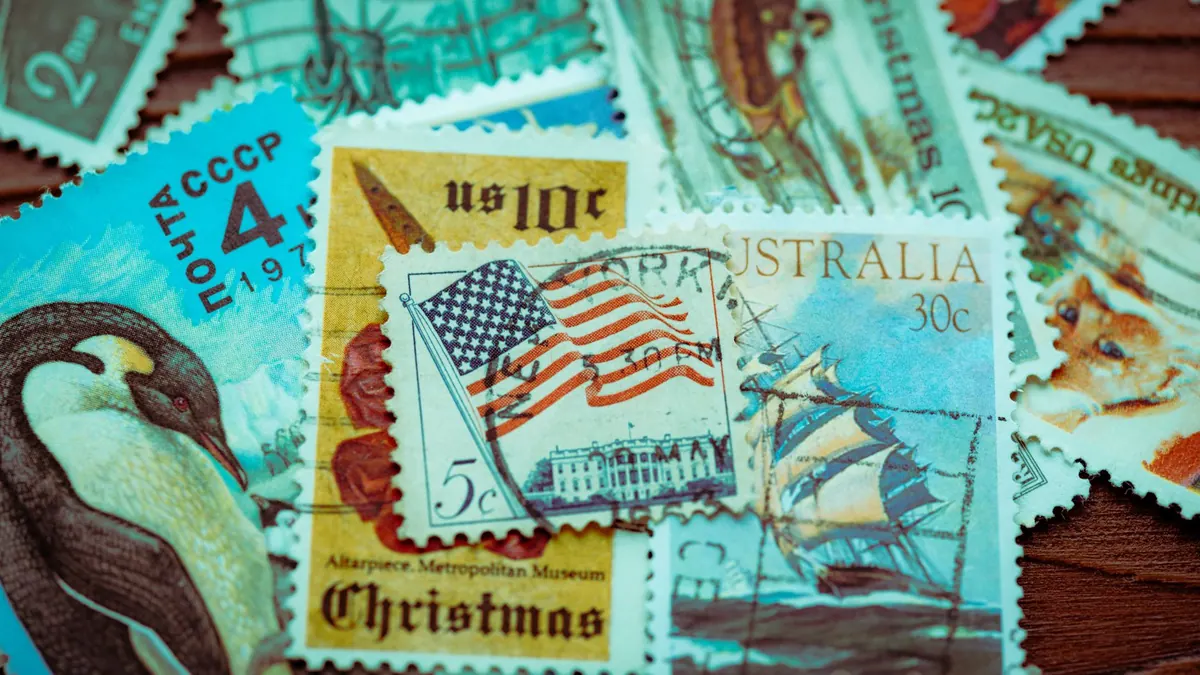
Commemoratives are the stamps people save. They're usually larger, more detailed, and designed by artists rather than committees. A single issue might honor a novelist, a native wildflower, a moon landing, or a century-old bridge.
They cost the same as a definitive of the same denomination — that's the part many senders don't realize. A commemorative is not a premium product. It pays postage exactly like the flag stamp, unless it has become a collectible worth more than its face value, which does happen with older issues.
Where commemoratives shine is on mail a person will actually hold: birthday cards, wedding invitations, condolence notes, thank-you letters, and pen pal correspondence. Matching the stamp to the recipient takes ten seconds and lands every time — a garden stamp on a seed catalogue order, a train stamp on a note to a railway enthusiast, a love stamp on an anniversary card.
The trade-off is supply. Once a commemorative sells out, it's gone from the post office, so if you like an issue, buy a sheet while it's current rather than a single stamp.
Design doesn't pay for postage — face value does. A few practical points to keep straight:
Never reuse a stamp that has already been through the mail, and don't tape over a stamp to hold it down — postal services treat an obscured stamp as unpaid postage, and your letter may arrive with a surcharge. Do write the address first, then place the stamp; if you redo the address, you haven't wasted a stamp.
Store unused stamps somewhere dry and flat, away from sunlight. A small tin or a zip bag works better than a kitchen drawer. And if you also collect, keep a separate supply for the album. Soaking a stamp off an envelope destroys the gum and often the corners, so mail you want to keep is best left intact.
Most modern commemoratives trade at or near face value, but older issues can be worth several times that. If a stamp looks unusual — an old date, an odd denomination, a printing error — set it aside and have a dealer or a local stamp club take a look before it goes on an envelope. Once it's cancelled, it's just postage.
Keep a sheet of definitives for the mail you send without thinking, and a small selection of commemoratives for the mail you send with care. That one habit covers almost everything: bills move quickly, birthday cards look like someone chose them, and you never have to guess whether a stamp is enough. When in doubt, a definitive in the right denomination is the safe answer — and a commemorative is the thoughtful one.
Photo: Tolga deniz Aran / Pexels